
Deposit Timing Strategies That Sync Multiplier Chains from Slots to Live Dealer Tables
Deposit timing plays a measurable role in how multiplier sequences activate and extend across digital slot reels, table game rounds, and live dealer broadcasts, according to industry mechanics tracked by platform operators. When players schedule deposits to coincide with specific bonus windows or game cycle resets, the resulting multiplier chains often link together rather than operate in isolation, creating extended progression paths that carry value from one format into the next. Data from platform analytics shows these alignments occur most frequently during peak server load periods when real-time systems refresh promotional layers simultaneously across multiple game types.
Mechanics Behind Timed Deposits in Slot Environments
Slot systems frequently tie multiplier activation to deposit confirmation timestamps, allowing chains to build when funds arrive within narrow windows that overlap with reel feature triggers. Observers note that a deposit placed just before a progressive meter increments can feed directly into subsequent free-spin rounds, extending the multiplier count beyond standard base-game limits. Research from gaming technology providers indicates that these overlaps become more pronounced in networked slot libraries where shared jackpot pools update every few seconds, giving precise deposit moments an outsized effect on chain length and payout potential.
Platform logs further reveal that certain slot titles reset their internal multiplier ladders at fixed intervals, so deposits arriving immediately before those resets position the player to capture both the old and new multiplier tiers within a single session. This sequencing matters because many titles carry forward any active multiplier status when a new deposit clears, preventing the chain from breaking between spins.
Table Game Multiplier Alignment Through Deposit Windows
Table games incorporate deposit timing in different ways, often through side-bet multipliers or progressive side pots that refresh on set schedules. When a deposit processes during a shoe change or table reset, the incoming funds can qualify for multiplier bonuses that stack with existing table promotions, extending chains across multiple hands. Figures from operator reports show that players who time deposits to land within thirty seconds of a table's promotional refresh achieve higher average multiplier retention rates than those depositing outside those windows.
Blackjack and roulette variants with dynamic multiplier wheels demonstrate particularly clear patterns, since wheel segments update in real time and accept new deposits as triggers for the next cycle. Experts tracking these systems note that the alignment allows multipliers earned on one table to carry over when the same account balance funds play on a second table, provided the deposit timestamp falls inside the active promotion period.
Live Stream Integration and Cross-Format Chains
Live dealer streams add another layer because their multiplier features often synchronize with backend deposit systems through shared APIs. A deposit completed while a live stream runs a bonus round can activate a multiplier that applies to both the stream and any linked slot or table session running on the same account. Platform data collected through 2026 shows these cross-format links occur most reliably when deposits process during the first minute of a new live dealer shift, when systems reconcile promotional states across all connected games.
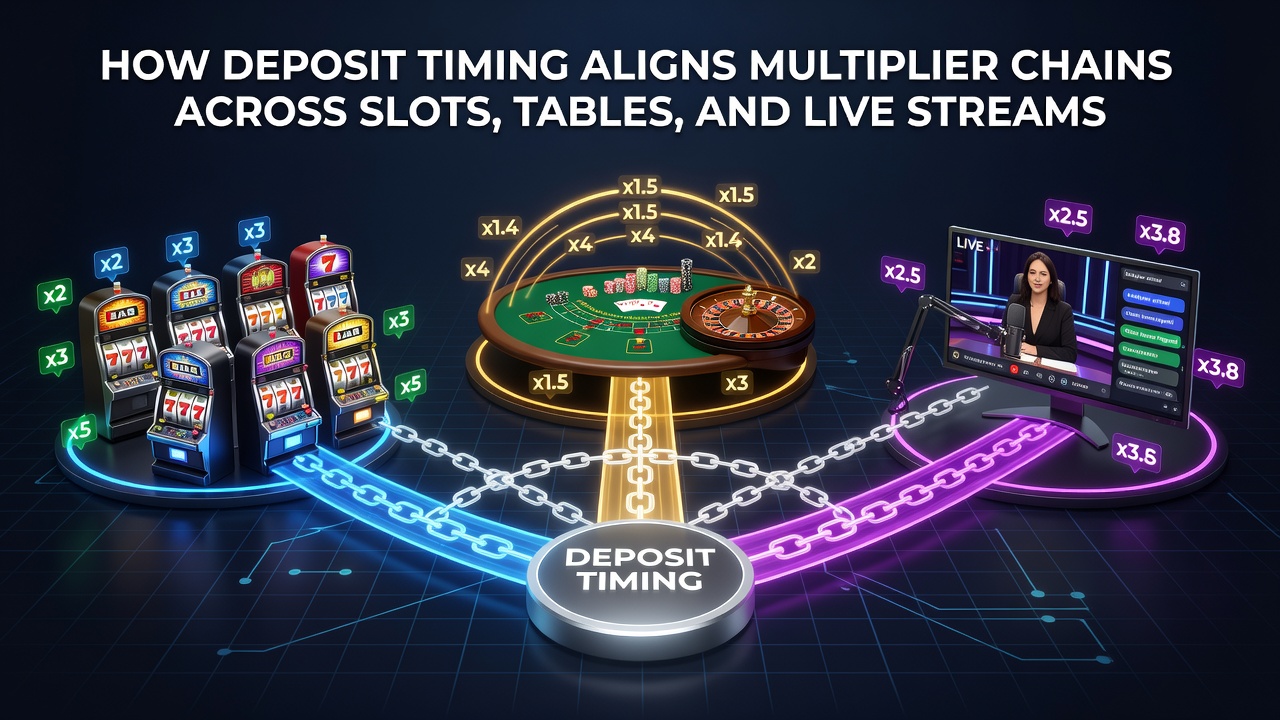
Those monitoring live dealer platforms report that multiplier chains can persist when a player moves from a live blackjack table to a slot lobby, but only if the original deposit timestamp remains within the active bonus window. This persistence depends on how each operator configures its real-time ledger, with some systems allowing up to fifteen minutes of carry-over while others enforce stricter per-game resets. October 2026 updates from several major providers introduced unified timestamp tracking across live and non-live products, reducing chain breaks for players who maintain continuous deposit activity.
Practical Patterns Observed Across Platforms
Operators document recurring patterns where deposits made at consistent intervals produce longer multiplier sequences than random timing. One documented approach involves spacing deposits to match the average cycle length of each game type, allowing the chain to migrate from slots into tables and then into live streams without resetting. Industry organizations such as the American Gaming Association have published summaries of similar timing data collected from member platforms, highlighting how synchronized deposit events correlate with extended bonus lifespans.
Another observed method uses scheduled deposits that align with global server events, such as daily jackpot seeding or live tournament starts. These moments create temporary multiplier amplification windows that affect all three formats simultaneously, enabling players to transfer value across game categories while the boosted state remains active. Canadian regulatory reports from provincial gaming authorities have tracked comparable synchronization effects in multi-format environments, confirming the role of timestamp precision in maintaining chain continuity.
Conclusion
Deposit timing functions as a coordinating mechanism that links multiplier progression across slots, tables, and live streams through shared timestamp protocols and promotional refresh cycles. Platform data and operator reports demonstrate that strategic placement of deposits within specific windows extends chain duration and enables value transfer between formats. As systems continue to unify timing across product types, these alignments become more consistent, giving players additional control over how multipliers develop during extended sessions.