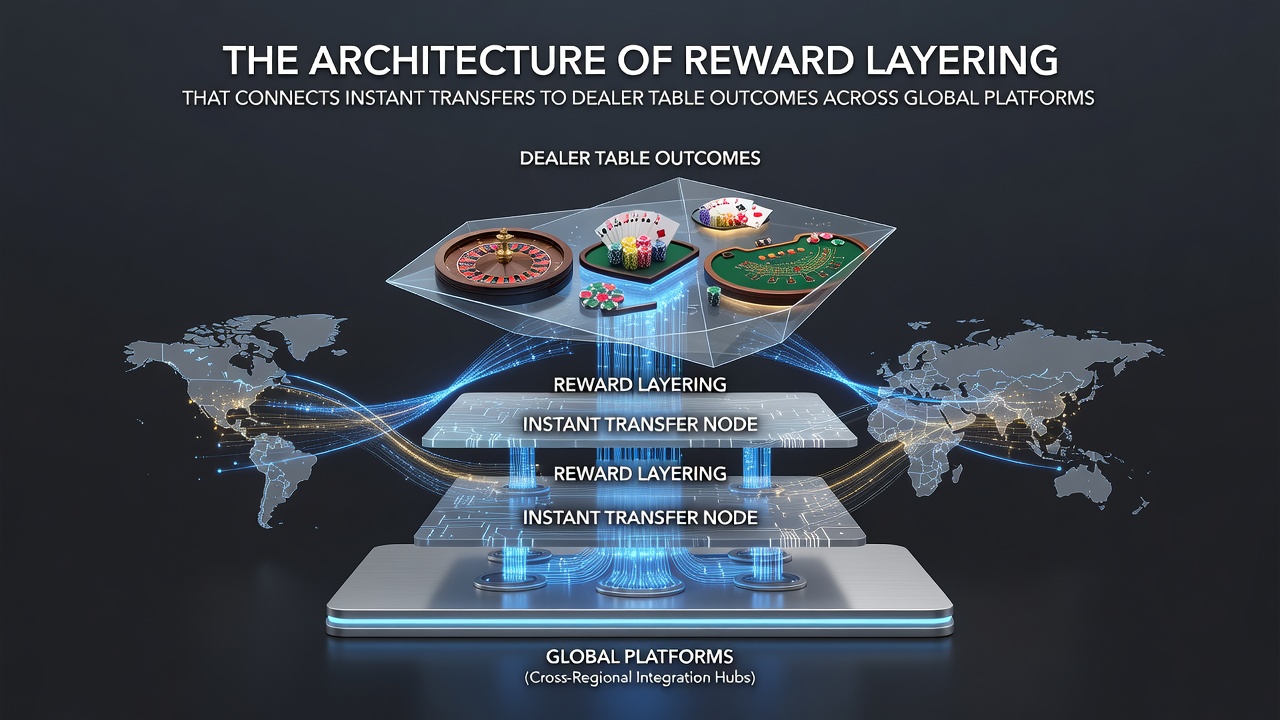
The Architecture of Reward Layering That Connects Instant Transfers to Dealer Table Outcomes Across Global Platforms
Platform operators maintain complex systems where instant transfer protocols feed directly into reward engines that adjust live dealer table parameters in real time, and these mechanisms operate across multiple jurisdictions with varying regulatory requirements. Data from integrated payment gateways trigger conditional bonuses that modify bet multipliers, side bet availability, and table progression rates during sessions that involve physical dealers streamed from studios in Europe, Asia, and North America.
Core Components of the Layering System
Engineers design the architecture around modular layers that separate payment verification from game outcome calculation, yet maintain persistent connections that allow deposit events to influence table features without altering random number generation. The first layer handles transaction confirmation through banking APIs and digital wallets, while the second layer evaluates player history and current session metrics to determine eligibility for stacked incentives. Observers note that these connections rely on standardized APIs that platforms update quarterly, with August 2026 deployments incorporating faster settlement times from several major processors.
Researchers at institutions studying digital gaming infrastructure have documented how the third layer interfaces with live dealer software, applying modifiers such as increased payout tables or exclusive betting options once the transfer clears. This integration occurs through secure event buses that transmit metadata rather than raw financial details, preserving compliance boundaries while enabling dynamic table adjustments visible to participants within seconds of deposit completion.
Global Implementation Patterns
Platforms serving North American markets often route instant transfers through processors approved by the New Jersey Division of Gaming Enforcement, whereas operators in the Asia-Pacific region align similar systems with guidelines from the Gambling Regulatory Authority of Singapore. These regional variations produce distinct layering sequences, yet the underlying data flows remain comparable because vendors supply unified middleware that adapts to local rules. Figures from industry reports indicate that cross-border platforms processed over 40 percent of live dealer sessions through such layered reward structures by mid-2026.

European operators connect the same architecture to frameworks overseen by the Malta Gaming Authority, creating parallel pathways that feed deposit events into table outcome adjustments. One study from academic researchers tracking global gaming technology revealed that synchronization delays between layers average under 800 milliseconds on optimized networks, which allows players to see updated betting options almost immediately after funds arrive. The architecture accommodates both fiat and cryptocurrency transfers, with separate verification sub-layers that converge before reaching the dealer interface.
Data Flow and Outcome Modification
Instant transfers carry metadata flags that the reward engine parses to activate specific table enhancements, such as temporary access to high-limit seats or accelerated loyalty point accrual during live sessions. These modifications appear as visual overlays on dealer streams and alter payout structures for the current hand or round without changing the underlying card shuffle or wheel spin. Platform logs show that such layering occurs most frequently during peak hours when multiple regions overlap in active play windows.
Industry associations including the European Gaming and Betting Association have published technical overviews confirming that encryption protocols isolate financial data from game servers, routing only abstracted reward signals to the dealer software. This separation supports audit trails required by regulators while permitting the rapid response times demanded by mobile users. Platforms that expanded these connections in 2025 reported measurable increases in session duration metrics tied directly to the layered incentives.
Conclusion
The described architecture continues to evolve as payment technologies advance and regulatory bodies issue updated technical standards, with August 2026 marking several coordinated updates across major providers. Observers track these developments through anonymized performance data shared among operators, revealing consistent patterns in how instant transfers influence live dealer environments on a global scale. The modular design allows individual layers to receive independent upgrades while preserving end-to-end connectivity that defines current platform operations.